NDIS Nursing Jobs in Queensland: What the Work Actually Involves
Quick answer
What is it like working as an NDIS nurse?
NDIS nursing is community nursing in people's homes, usually one nurse per visit, working to a care plan you often write yourself. It covers wound care, PEG feeding, catheter and stoma care, medication administration and complex bowel care, and it needs AHPRA registration plus an NDIS Worker Screening Check.
Most nurses come to the NDIS from a hospital ward, aged care or community health, and the first thing that surprises them is how different the work feels. You are usually on your own, in someone's home, making decisions without a colleague two metres away. For some nurses that is the best part of the job. For others it is the reason it does not suit them. This guide covers what the work actually involves, so you can tell which one you are before you apply.
What an NDIS Nursing Day Looks Like
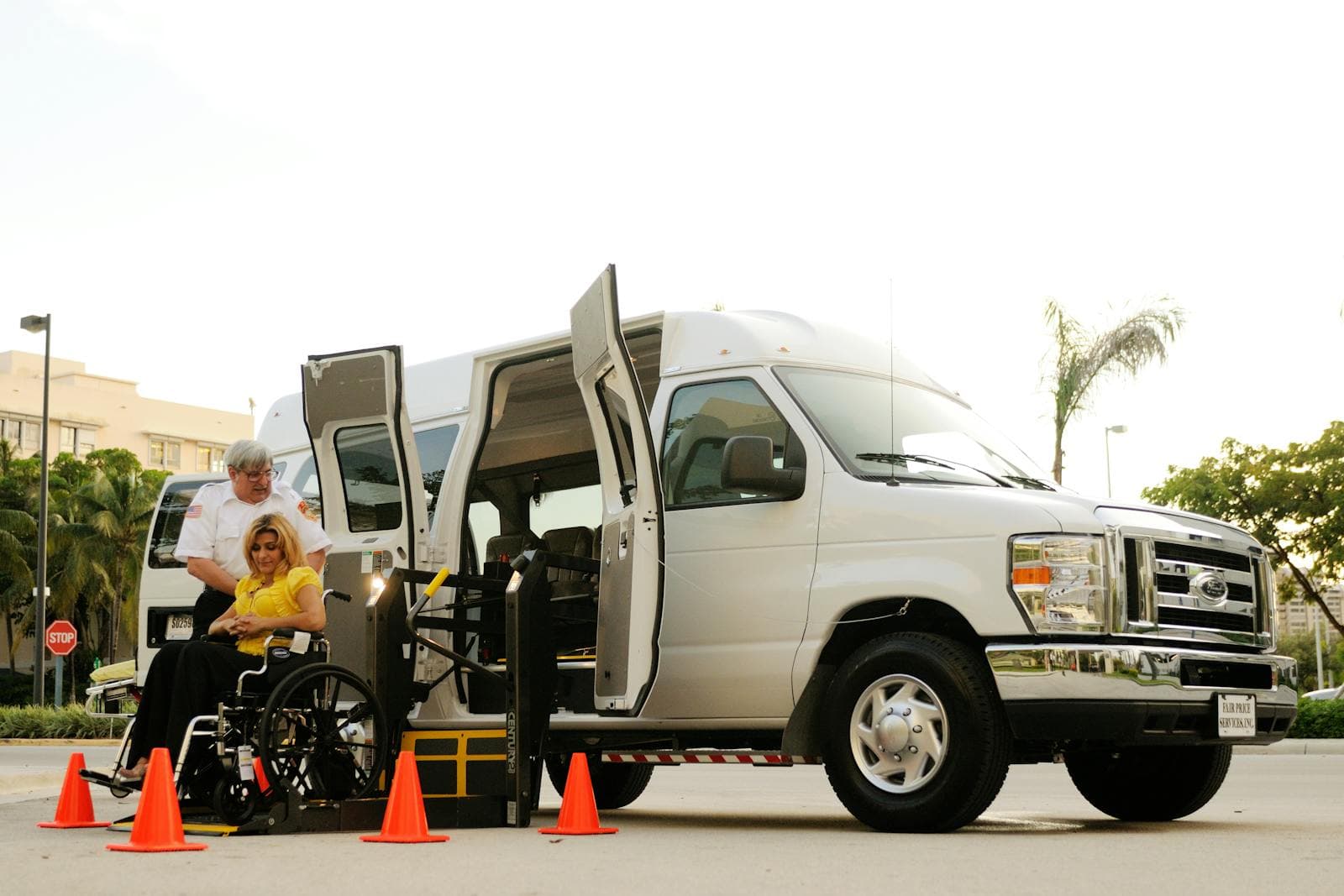
You travel to participants in their own homes rather than having patients come to you. A typical day is a series of scheduled visits, each with a defined clinical purpose: a dressing change, a PEG feed and site check, a catheter change, medication administration, or a review of how a support team is managing a bowel care regime.
Visits are longer than a hospital interaction and far less interrupted. You are not covering a ward, and you are not being pulled to a deteriorating patient mid-task. What replaces that pressure is travel, documentation between visits, and the mental load of being the only clinician in the room.
Most community nursing is scheduled during weekdays, though evening, weekend and overnight work exists where a participant's needs require it. Rosters tend to be more predictable than hospital shift work, which is one of the main reasons nurses make the move.
How It Differs From Hospital Nursing
The biggest difference is autonomy. In a home there is no rapid response team and no registrar down the corridor. You assess, you decide, and you escalate to a GP, a nurse practitioner or emergency services when the situation calls for it. Nurses who like carrying that responsibility thrive. Nurses who draw energy from a team around them often find it isolating, and that is worth being honest with yourself about before you apply.
The second difference is that you are a guest. You work in someone's living room, on their terms, around their family and their routine. Clinical skill matters, but so does the ability to build a relationship with someone you will see every week for years, and sometimes with a family who has been let down by services before.
The third is scope. In the NDIS a registered nurse frequently writes the care plan, then trains and delegates specific tasks to support workers with competency sign-off and ongoing oversight. You are not only delivering care, you are building the capability of a team around the participant. That is a genuinely different skill from ward nursing, and it is where a lot of the job satisfaction sits.
The Five Nursing Levels, and What They Mean for Your Career
The NDIS prices nursing at five levels: enrolled nurse, registered nurse, clinical nurse, clinical nurse consultant and nurse practitioner. They map to the scope you can practise at, not to how good you are.
An enrolled nurse delivers care to an established plan under RN supervision. A registered nurse assesses, writes the plan and delegates. A clinical nurse handles more complex or unstable presentations and provides clinical leadership. A clinical nurse consultant works consultatively on difficult cases, protocols and staff education. A nurse practitioner can diagnose, prescribe and refer, which is a genuine change in legal scope rather than simply seniority.
For anyone planning a career rather than a job, this structure matters: there is a defined path from EN through to NP, and the NDIS recognises and funds each step. You can see the current published rate for each level on our NDIS nursing rates tool.
What It Pays, Honestly
This is the part most job ads are vague about, so here is the straight version. The NDIS publishes a price for each nursing level, ranging on a weekday from around $103 an hour for an enrolled nurse to around $183 an hour for a nurse practitioner. Those figures are widely quoted in recruitment ads, and they are misleading.
That published figure is the maximum a provider can charge for the support. It is not a nurse's wage. It has to cover the nurse's pay and on-costs, superannuation, insurance, travel between visits, clinical supervision, documentation time, non-billable hours, and the cost of running a registered and audited provider. The amount that reaches the nurse is a fraction of it.
Actual pay for NDIS community nursing is broadly comparable to equivalent public and private sector nursing roles, and varies with your level, experience and whether the work is casual, part time or permanent. Penalty rates apply to evening, weekend, night and public holiday work, as they do elsewhere. If a provider quotes you the NDIS price limit as though it were an hourly wage, treat that as a reason to ask more questions rather than fewer.
What You Need Before You Can Start
Current AHPRA registration as an enrolled or registered nurse, with no conditions that would prevent community practice. An NDIS Worker Screening Check, which is the disability sector equivalent of a working with children check and is required for risk-assessed roles. A current driver's licence and a reliable car, because the work is built around travelling between homes.
Most providers will also expect current CPR and first aid, professional indemnity cover, and evidence of recent relevant clinical experience. Specific high-intensity skills such as PEG feeding, tracheostomy care, complex bowel care and subcutaneous injections are governed by the NDIS Practice Standards high intensity skills descriptors, so expect competency assessment rather than an assumption that a qualification alone is enough.
If you are coming from a hospital background and have not done community work before, that is not a barrier. What matters is clinical judgement and a willingness to work without a team at your elbow.
Who the Work Suits
It suits nurses who want continuity. You see the same people over months and years, and you watch a plan you wrote actually change someone's life rather than discharging them and never finding out. It suits nurses who want a predictable roster. And it suits nurses who like teaching, because training support workers well is most of what makes a participant's care sustainable.
It suits you less if you want a busy team environment, if you are uncomfortable making independent clinical decisions, or if you would rather not spend part of your day driving. None of those are failings. They are just a poor match for this particular job, and it is better to know that now.
Working With First Priority Care
We are a registered NDIS provider and we are nurse-led, which means our founder is a registered nurse and clinical decisions are made by clinicians rather than by a roster system. Practically, that means you have a nurse to call when a situation is not straightforward, and your clinical judgement is treated as the point of the role rather than an inconvenience.
We support participants across Brisbane, Logan, Ipswich, the Gold Coast, Redlands, the Sunshine Coast and Moreton Bay, and regionally across Townsville, Cairns, Mackay, Rockhampton and Toowoomba. We hire enrolled nurses, registered nurses and clinical nurses on full time, part time and casual arrangements.
If the work sounds like the right fit, our careers page has current openings and takes applications directly. If you would rather ask a question before applying, call 1800 402 205 and ask to speak with the clinical team.
Related services and pages
About the author
Sam Wagle · Registered Nurse
AHPRA registered · NMW0002343116
Sam Wagle is the founder of First Priority Care and a Registered Nurse (AHPRA registration NMW0002343116). Sam leads our clinical team and reviews the guides we publish, so the information here is practical, accurate and easy to follow.
Ready to talk to a registered NDIS provider?
Call us on 1800 402 205 or submit a referral online.