NDIS Transport Funding Explained
Quick answer
How does NDIS transport funding work?
NDIS transport funding comes in two forms. A transport allowance is paid into your Core Supports at one of three levels, based on how much you travel for work, study or community activity. Provider delivered transport is billed per trip when a support worker drives you. Most plans use one or the other.
Transport is one of the most confusing parts of the NDIS, partly because there are a few different ways it can be funded. If you have trouble getting around and are not sure what your plan covers, this guide sorts it out.
Two Different Kinds of Transport
There are two things people mean when they talk about NDIS transport. The first is the transport allowance: a set amount of funding to help you pay for getting around when you cannot use public transport because of your disability. The second is transport delivered as part of a support, such as a support worker driving you to an activity.
These are funded differently, and mixing them up is where a lot of confusion starts. It helps to know which one you are actually talking about.
The Transport Allowance and Its Levels
The transport allowance is funded under Core Supports and paid to help with taxis, rideshare, community transport or running a modified vehicle. The NDIA sets it at broadly three levels, based on how much you need to travel for work, study or community activities.
Level one suits participants who are not working or studying but want to get out into the community. Levels two and three are for participants who travel more, often for study or some paid work. If your circumstances change, you can ask for a higher level at your plan review.
Transport Delivered by a Support Worker
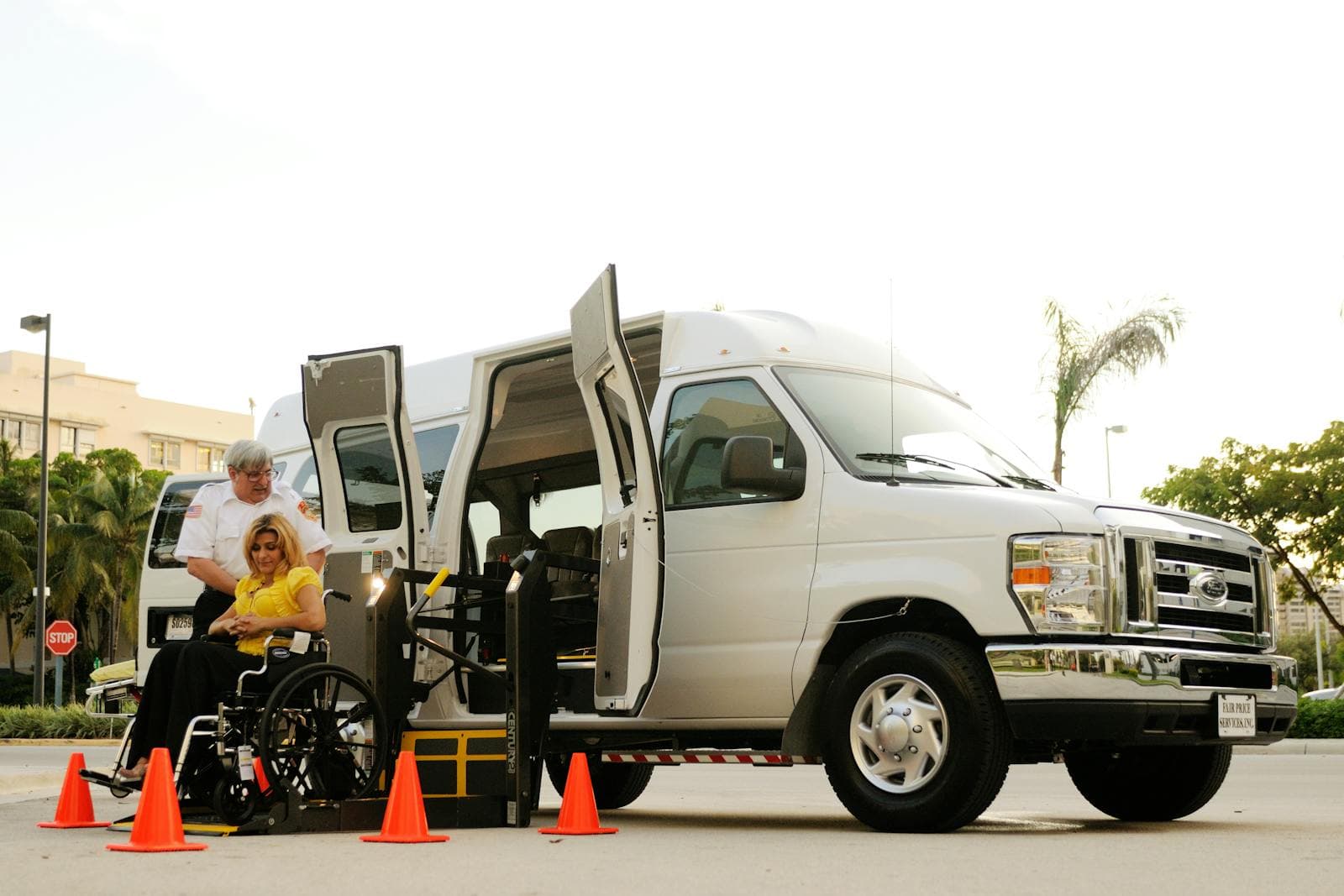
Separately, when a support worker drives you somewhere as part of your support, that travel is usually covered under your other Core funding rather than the transport allowance. This is common with community access, where getting there is part of the support.
So a participant can have both: a transport allowance for independent travel like taxis, and support-worker transport built into their community or in-home supports. Your provider can help you use each in the right way.
What It Does Not Cover
NDIS transport funding is for disability-related travel. It does not cover costs you would have anyway, such as the everyday running of a car for a whole household, or travel that is really someone else's responsibility, like getting to school where the education system provides transport.
It also does not usually pay for medical appointments that other systems, such as Medicare or the hospital, are meant to cover. When in doubt, ask your support coordinator or provider before you commit.
Disability Transport in Queensland
First Priority Care provides disability transport and support-worker travel across Brisbane, Logan, Ipswich, the Gold Coast, Redlands and regional Queensland. We help you get to work, study, appointments and the things you enjoy, safely and on time.
Call 1800 402 205 or submit a referral online. We respond within one business hour.
Related services and pages
About the author
Sam Wagle · Registered Nurse
AHPRA registered · NMW0002343116
Sam Wagle is the founder of First Priority Care and a Registered Nurse (AHPRA registration NMW0002343116). Sam leads our clinical team and reviews the guides we publish, so the information here is practical, accurate and easy to follow.
Ready to talk to a registered NDIS provider?
Call us on 1800 402 205 or submit a referral online.